


In Memory of Sergeant Stubby - The Most Decorated War Dog of World War I (...Who May Have Invented Football's Halftime Show!)

No alt text provided for this image

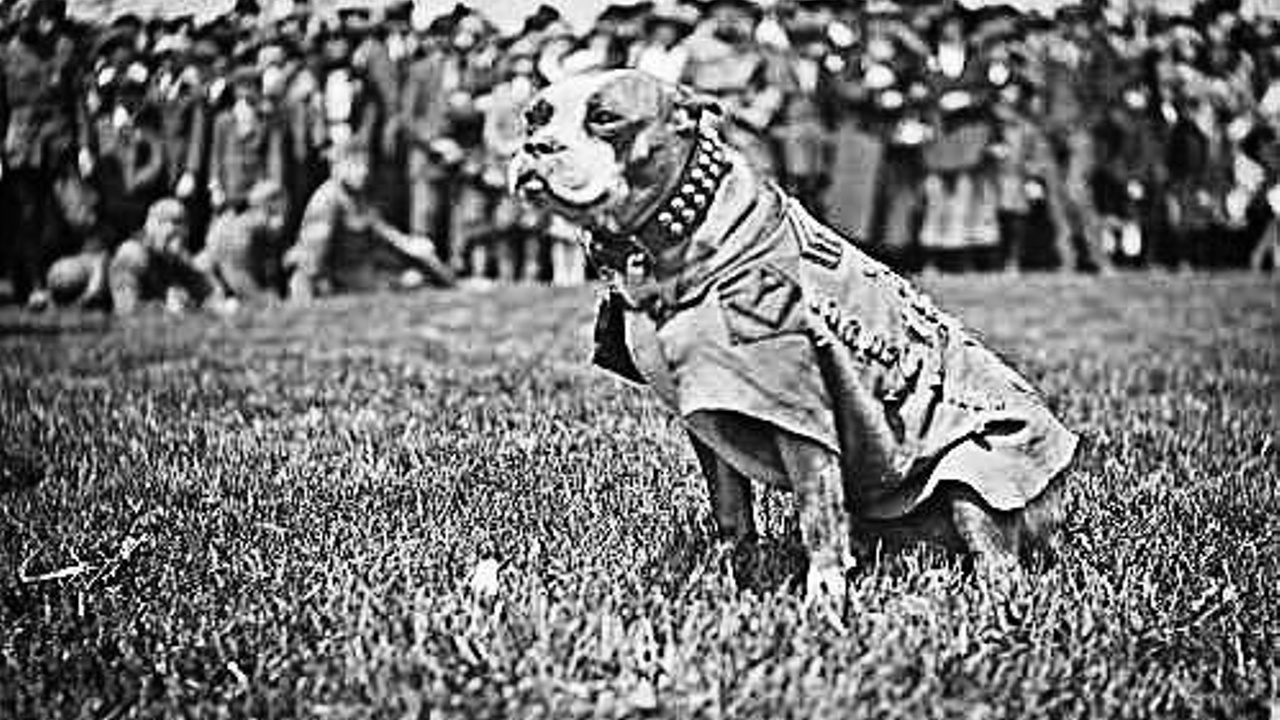
Sergeant Stubby was the most decorated war dog of World War I and the only dog to be promoted to sergeant. Smuggled aboard the USS Minnesota, he served with the 102nd Infantry, 26th (Yankee) Division in the trenches in France for 18 months, participated in 4 offensives, and 17 battles. Stubby learned to warn his unit of gas attacks, located wounded soldiers, and could hear incoming artillery shells long before the rest of the unit. He even caught a German soldier by grabbing him by the seat of his pants and holding him there until American soldiers found him.

His actions were well-documented.

Stubby has been called the most decorated war dog of WWI and the only dog to be nominated for rank and then promoted to sergeant through combat.

Stubby was described in news stories as a Boston Terrier or "American bull terrier," a mutt, and a dog of "uncertain breed."

The brindle-patterned pup probably owed at least some of his parentage to the evolving family of Boston Terriers, a breed so...

Continue Reading...

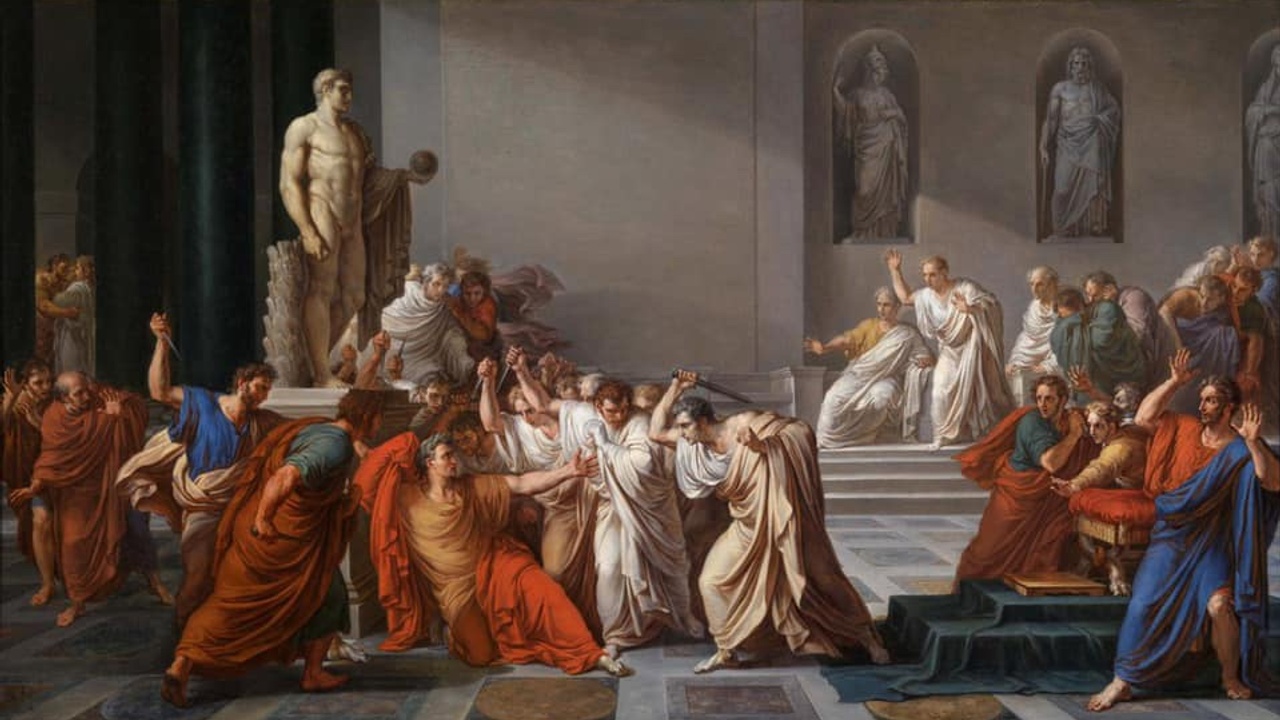
Beware the Ides of March!


On this Day, March 15, 44 B.C., Julius Caesar is assassinated on the Ides of March by a group of 60 conspirators led by Marcus Brutus. According to the historian Plutarch, a fortune teller had warned Caesar, "beware the ides of March." This event was immortalized in Shakespeare's play, “Julius Caesar.”

The word Ides is from Latin, meaning to divide, and is the 15th day of March, May, July, October, and the 13th day of the other months in the ancient Roman calendar. At one time, the Ides of March marked the new year.

#otd #history #Caesar #March

Continue Reading...

The World's Two Greatest Theoretical Physicists, Albert Einstein and Stephen Hawking, Share a Significant Day (Today)

The two famous physicists in their own changed the way we see the universe, share this Day, March 14th.

Today is the 142nd birthday of the great German-born theoretical physicist and mathematician, Albert Einstein.

No alt text provided for this image

Einstein suffered from a mild case of Asperger’s syndrome, a developmental disorder characterized by difficulties in social interaction and nonverbal communication, as well as attention deficit disorder (ADD).

Einstein, of course, developed the theory of relativity and the mass equivalence formula: E=mc2. By the age of 26, he had published four ground-breaking papers: Photoelectric effect, Brownian motion, special relativity, and the equivalence of mass and energy. He would go on to publish more than 300 scientific papers. He was visiting the U.S. when Adolf Hitler came to power in 1933; being Jewish, he did not want to return to Germany, eventually becoming a U.S. citizen.

No alt text provided for this image

Coincidentally, March 14th also marks the day legendary scientist Stephen Hawking passed away,...

Continue Reading...

Robert Ludlum—Famed Author of the Jason Bourne Thrillers: How His Life--and Death--Imitated his Art

Famed thriller author, Robert Ludlum died on this day, March 12, 2001. From The Scarlatti Inheritance and The Osterman Weekend, to the Bourne Supremacy, movies, digital games, and 41 other novels in-between, Ludlum will always be a hard act for any author to follow. The number of copies of Ludlum’s books in print is estimated up to 500 million: and his books have been published in 33 languages and 40 countries.

Perhaps less known, is that his life—as well as his death may parallel that of his most famous protagonist, Jason Bourne.

Robert Ludlum led a fascinating life.

Ludlum was born in New York City, the adopted son of Margaret Wadsworth and George Hartford Ludlum. He never found who his birth parents were.

As an adopted child, Robert Ludlum explored the limits of reasonable behavior and parental tolerance. After a seemingly endless period of rowdy behavior, this future superstar settled down at the famed Connecticut prep-school, Cheshire Academy, and began to establish himself as...

Continue Reading...

The Son of a Scottish Pig Farmer who may have Saved Your Life...

His name was Alexander Fleming—the son of a Scottish pig farmer. He served in World War I, and his research has likely saved your life at some point. Or at least your parents' or grandparents' lives--and therefore yours as well! He received the Nobel Prize for his accidental discovery of penicillin.

Because he passed away On this Day, March 11, 1955, now is a very good time to recount his incredible story...

No alt text provided for this image

Sir Alexander Fleming was born at Lochfield near Darvel in Ayrshire, Scotland on August 6th, 1881.

His parents, Hugh and Grace were farmers, and Alexander was one of their four children. He also had four half-siblings who were the surviving children from his father Hugh's first marriage.

His parents could not afford to send him to school. His father passed away when he was only seven years of age.

No alt text provided for this image

He worked at a shipping office in London where he moved to when he was 13, and ultimately attended the Royal Polytechnic Institution since he could not afford to go to a private ...

Continue Reading...

The Accidental Sale of the First Ford Mustang...and How Ford Got it Back

On this Day, March 9, 1964, Ford began production of its new sports car, the Mustang.

At that moment in time, the U.S. economy was booming, the first Beatles record had just been released, LBJ had announced his War on Poverty, and the country was still trying to shake off the November 1963 assassination of President John F. Kennedy.

Cars were a positive distraction, and the release of the Ford Mustang was no exception.

The Mustang’s styling, with its long hood and short deck, proved wildly popular and inspired a host of competition.

No alt text provided for this image

At a base price of $2,368, it was originally intended to be a mid-engine two-seated roadster, but that changed when the sales of the Thunderbird increased after adding a back seat.

Since it was introduced four months before the normal start of the 1965 production year, the earliest Mustangs are widely referred to as the 1964½ model by enthusiasts.

Before the car officially hit the sales floor on April 17, 1964, Ford wanted every dealership to have a...

Continue Reading...

Wounded Three Times in War—and the Longest Serving Supreme Court Justice in History

Civil War Veteran, Supreme Court Justice, legal historian, and one of the most respected jurists in American history, Oliver Wendell Holmes, Jr., was born On this Day, March 8, 1841, in Boston.

No alt text provided for this image

He was the Son of Oliver Wendell Holmes, Sr—the celebrated poet—and was the eldest of three children

A Civil War veteran of the Twentieth Massachusetts Volunteer Infantry, he was wounded 3 times at: the Battle of Ball’s Bluff (in the chest); Antietam (in the throat); Chancellorsville (in his foot).

No alt text provided for this image

At Antietam, Captain Holmes was struck by two bullets, one broke the buckle of his knapsack, the other pierced his neck. Holmes father famously recorded his search for his son in "My Hunt for the Captain." He traced him to Hagerstown, Maryland, and there found him on a train bound for home to recover from his wounds.

No alt text provided for this image

There are many stories about Holmes, but this one always comes to mind (albeit disputed), when, in July 1864, Confederal General Jubal Early’s forces were threatening Washin

...
Continue Reading...

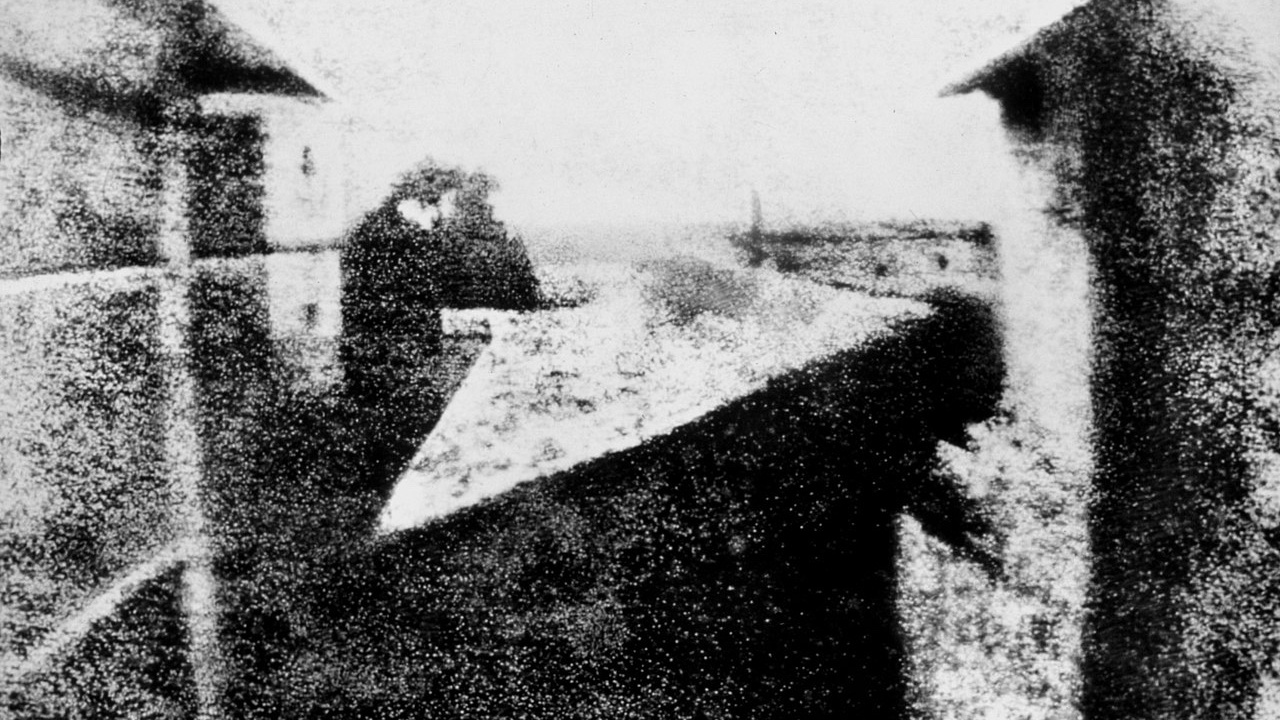
The Inventor of Photography also Invented the First Internal Combustion Engine!

French inventor, Joseph Nicéphore Niepce was born today, March 7, 1765 in Chalon-sur-Saône, Saône-et-Loire, where his father was a wealthy lawyer. He had an older brother Claude, a sister, and a younger brother, Bernard.

No alt text provided for this image

He created the first true photographs, but with the help of his brother, Claude, he also invented the first internal combustion engine.

Niépce was educated for the Catholic Priesthood. While studying at the seminary, he decided to adopt the name Nicéphore in honor of Saint Nicephorus the ninth-century Patriarch of Constantinople.

At the seminary, his studies taught him experimental methods in science, and by practicing those, he rapidly achieved success and ultimately graduated to become a professor at the college.

Because his family was suspected of royalist sympathies, Niépce fled the French Revolution but returned to serve in the French army as a staff officer under Napoleon Bonaparte in 1791 and served a number of years in Italy and on the island of Sardi

...
Continue Reading...

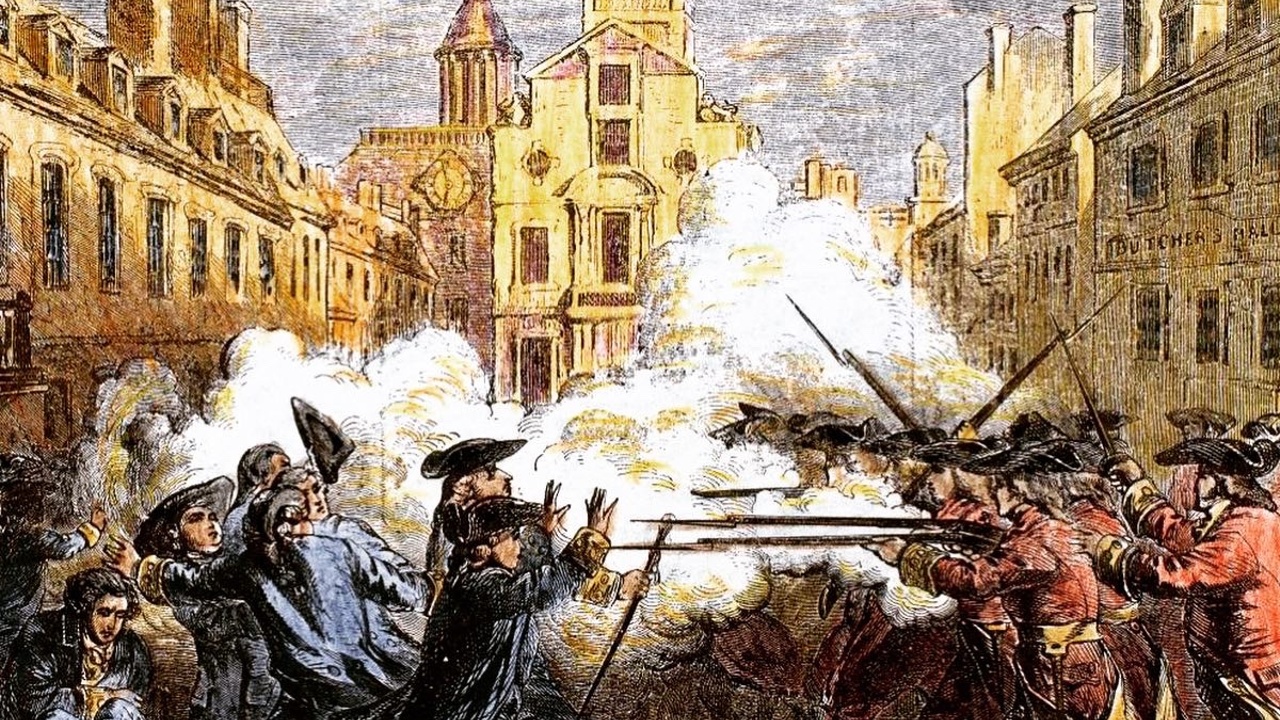
The Boston Massacre Was Today, in 1770: How it Contributed to the Presumption of Innocence and Reasonable Doubt

On This Day, March 5, 1770, British Army troops fire into a Boston mob, killing five. Paul Revere, Samuel Adams, and others used the event to call for rebellion against the British authorities. Future U.S. President John Adams defended the troops in a court case that established the presumption of innocence.

No alt text provided for this image

A mob of Boston colonists had formed around a British sentry who was guarding the King's money stored inside the Custom House. The colonists began insulting the guard who struck one with his bayonet. The colonists retaliated by throwing snow and stones.

No alt text provided for this image

The guard, fearing a riot and concerned for the loss of the King's money, called for reinforcements. When the colonists began striking the officers with clubs they fired back, killing five people and wounding six others.

No alt text provided for this image

Eight British soldiers and their officer in charge, Captain Thomas Preston, faced charges for murdering the five colonists.

No alt text provided for this image

Not far from the Custom House, a 34-year-old Boston attorney sat in his off

...
Continue Reading...

Was “Ripley’s Believe It Or Not” Responsible for our National Anthem?

On this Day, March 3, 1931, Francis Scott Key's song The Star-Spangled Banner is adopted as the American national anthem by Congress.

But how that happened exactly is little-known to most. To put it simply, it was an evolution and a process...but to put it mildly, it was not at all simple.

No alt text provided for this image

Of course, Key wrote the song in 1814 after seeing the American flag flying following the British bombardment of Ft. McHenry during the War of 1812.

But in writing the song, Key borrowed widely from other songs and melodies, often with very similar lyrics.

Long assumed to have originated as a drinking song, the melody was taken from the song “To Anacreon in Heaven,” which first surfaced about 1776 as a club anthem of the Anacreontic Society, an amateur mens’ music club in London. Written by British composer John Stafford Smith—whose identity was discovered only in the 1970s by a librarian in the music division of the Library of Congress—the song was sung to signal a transition between the e

...
Continue Reading...
Close

50% Complete

Two Step

Lorem ipsum dolor sit amet, consectetur adipiscing elit, sed do eiusmod tempor incididunt ut labore et dolore magna aliqua.