The Battles of Lexington and Concord were the first military engagements of the American Revolutionary War, fought On This Day, April 19, 1775.
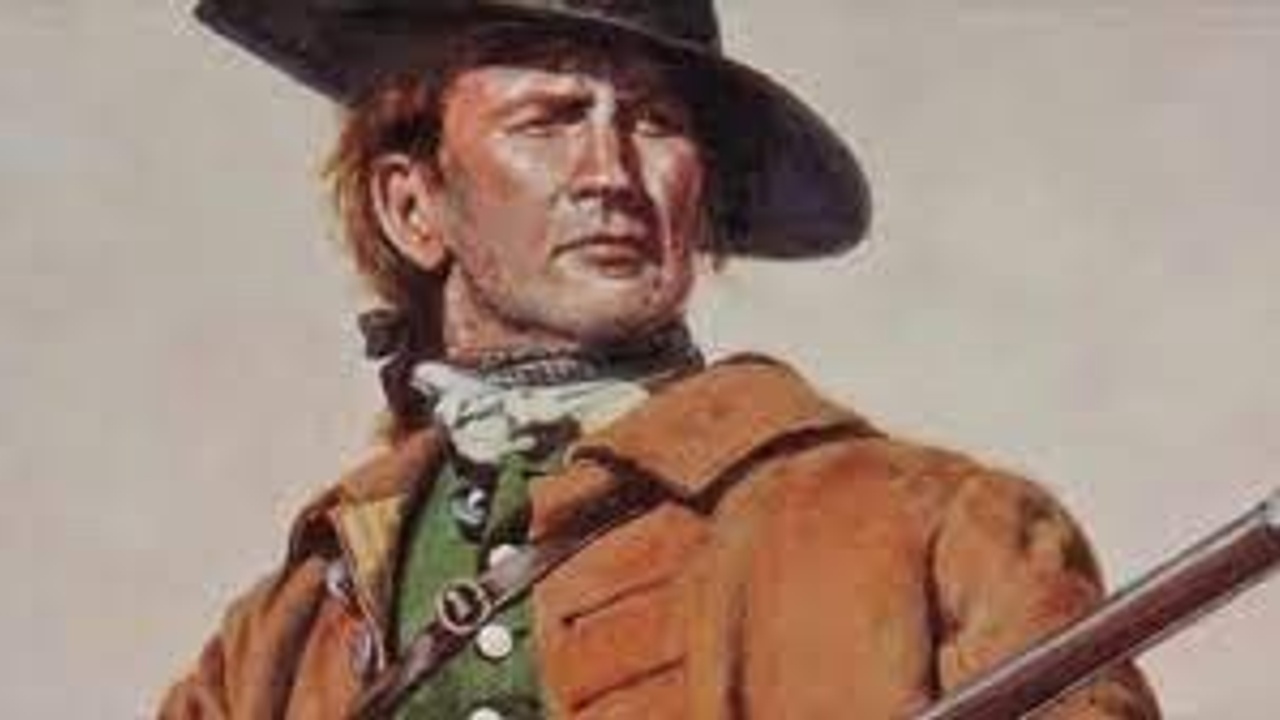
One of the more colorful veterans of that opening engagement was Samuel Whittemore.

Samuel Whittemore was in his mid-40s when he enlisted as a private in Colonel Jeremiah Moulton’s Third Massachusetts Regiment. He had fought in the French and Indian War, again fighting the French in Canada, and he even spent a brief period on board a ship that was hunting for a pirate.
He was always ready to drop his farming tools, pick up his weapons and march off to battle.
At the age of 64, in 1745, he was among the forces that stormed the French fortress at Louisburg, Nova Scotia, where he captured a fine, albeit gaudy and overdecorated, French saber that he would treasure the rest of his long life. As legend has it, Whittemore said that the former owner of the saber had "died suddenly," but furnished no further details.
As a young married man Sam built his own home, which he and his wife Elizabeth (Spring) soon filled with three sons and five daughters. The Whittemore home still exists, on Massachusetts Avenue in Arlington.

Whittemore proved to be just as aggressive in private life as in war. During a heated election contest in January 1741, he loudly declared that one of the contestants for public office, the proud and haughty Colonel Roderick Shipley Vassal, was no more fit for the office than Sam's elderly horse, Nero, whose value he assessed at less than 5 pounds.
The infuriated colonel promptly but illegally had Whittemore jailed, and while Sam was fuming in his cell, Vassal sued him for defamation of character. The ensuing trial was a heated and well-attended one. Dauntless Whittemore, who made an admirable witness for himself, won his case. He then promptly sued the arrogant colonel for false arrest; after another sterling performance, the court awarded Whittemore the equivalent of $6,000 to soothe his pride.
After Pontiac's War, Whittemore tended to his endless chores on the farm, but he also became interested in the prospect of the 13 Colonies gaining independence from Britain. He believed that his descendants should have their own country, be able to enact their own laws and not be subject to the whims of a distant king and government.

The Town of Cambridge, to which Menotomy belonged, elected him to a committee in 1768, after the repeal of the Stamp Act. The committee instructed the town’s representative to the General Court on how to vote. That same year, Cambridge elected him as a delegate to the Massachusetts Committee of Convention, which objected to Parliament’s revenue acts and the quartering of troops in Boston.
And late in 1772, the people of Cambridge elected 76-year-old Samuel Whittemore to the town’s Committee of Correspondence. The committee stridently objected to the Tea Act and cautioned,
“If we cease to assert Our rights we shall dwindle into supineness and the chains of slavery shall be fast rivetted upon us...”
Then came the skirmishes in Lexington and Concord. News traveled fast throughout the countryside, and hundreds of militia men from nearby towns came to harass the British as they retreated to Boston.

Samuel Whittemore left his field in Menotomy, somehow learning about the British action at Lexington at midday on April 19 (the sound of distant gunfire may have alerted him), and he immediately stopped working and rushed to his house.

There, before the eyes of his astonished family, Whittemore methodically loaded his musket and both of his famed dueling pistols, put his powder and ball inside his worn and well-traveled military knapsack, strapped his French saber around his waist, squared his grizzled jaw and, as he strode briskly out the door, simply informed his worried family that he was "going to fight the British regulars" and told them to remain safely indoors until he returned.

Whittemore walked to a secluded position behind a stone wall on Mystic Street, near the corner of what is now Chestnut Street in Arlington, and calmly settled in. Some of the Minutemen pleaded with Whittemore to join them in their safer positions, but he ignored their admonitions. Soon the 47th Regiment of Foot, followed by the main body of British troops, appeared in view. On both sides of Whittemore, Minutemen were shooting at the approaching Redcoats and then sprinting away to where they could reload in safety.

Waiting until the regiment was almost upon him, Whittemore stood up, aimed his musket carefully and fired, killing a British soldier. He then fired both dueling pistols, hitting both of his targets, killing one man outright and mortally wounding another. Not having time to reload his cumbersome weapons, he grabbed his French saber and flailed away at the cursing, enraged Redcoats who now surrounded him. Some of those infuriated soldiers were probably less than one quarter of Sam's 80 years; few, if any, were even half his age.

One Englishman fired his Brown Bess almost point-blank into Whittemore's face, the heavy bullet tearing half his cheek away and knocking him flat on his back. Undaunted, Whittemore attempted to rise and continue the fight, but received no less than 13 bayonet wounds from the vengeful Redcoats. They also mercilessly clubbed his bleeding head and drove their musket butts into his body as they ran by.

When the last Britisher had left the scene and was far enough away for them to come out in safety, the villagers who had seen Whittemore's last stand walked slowly toward the body. To their astonishment, he was still alive and conscious--and still full of fight! Ignoring his wounds, he was feebly trying to load his musket for a parting shot at the retreating regiment.
A door was used as a makeshift stretcher and Whittemore was carried to the nearby Cooper Tavern. Doctor Nathaniel Tufts of Medford stripped away Sam's torn, bloody clothing and was aghast at his many gaping bayonet wounds, the other numerous bruises and lacerations, and his horrible facial injury. According to every medical text Tufts had ever studied and all of his years of experience treating injured people, the old man should have bled to death from internal injuries.
Tufts sadly remarked that it was useless to even dress so many wounds, since Whittemore could not possibly survive for very long; the deep bayonet thrusts must have pierced many of his vital organs. The horrified bystanders, however, persuaded the reluctant doctor to do his best, and Tufts bandaged Whittemore. He did what he could with the frightful facial wound in an age when plastic surgery was unknown.
However, Whittemore recovered and lived another 18 years until dying of natural causes at the age of 96 on Feb. 2, 1793.

He was laid to rest in the Old Burying Ground in Arlington.
The Massachusetts Legislature declared him the official state hero in 2005, though the Senate got his age and dates wrong in the proclamation.
The stone marker memorializing him also gets a few things wrong.

“Near this spot Samuel Whittemore, then 80 years old, killed three British soldiers, April 19, 1775. He was shot, bayoneted, beaten and left for dead, but recovered and lived to be 98 years of age.”
Samuel Whittemore will be remembered most vividly for his actions at the Battle of Menotomy. But his response to the British soldiers on April 19, 1775 are best viewed within the larger context of his life. Rather than one single act, Whittemore’s heroic stand actually represented a continuum of action when taken in the context of his long life. Decades before he was shot, bayonetted, and left for dead on the ground in Menotomy, he had been his actions helped shape events on the local level—the coming American Revolution.