
The Great Influenza by John Barry
May 12, 2020
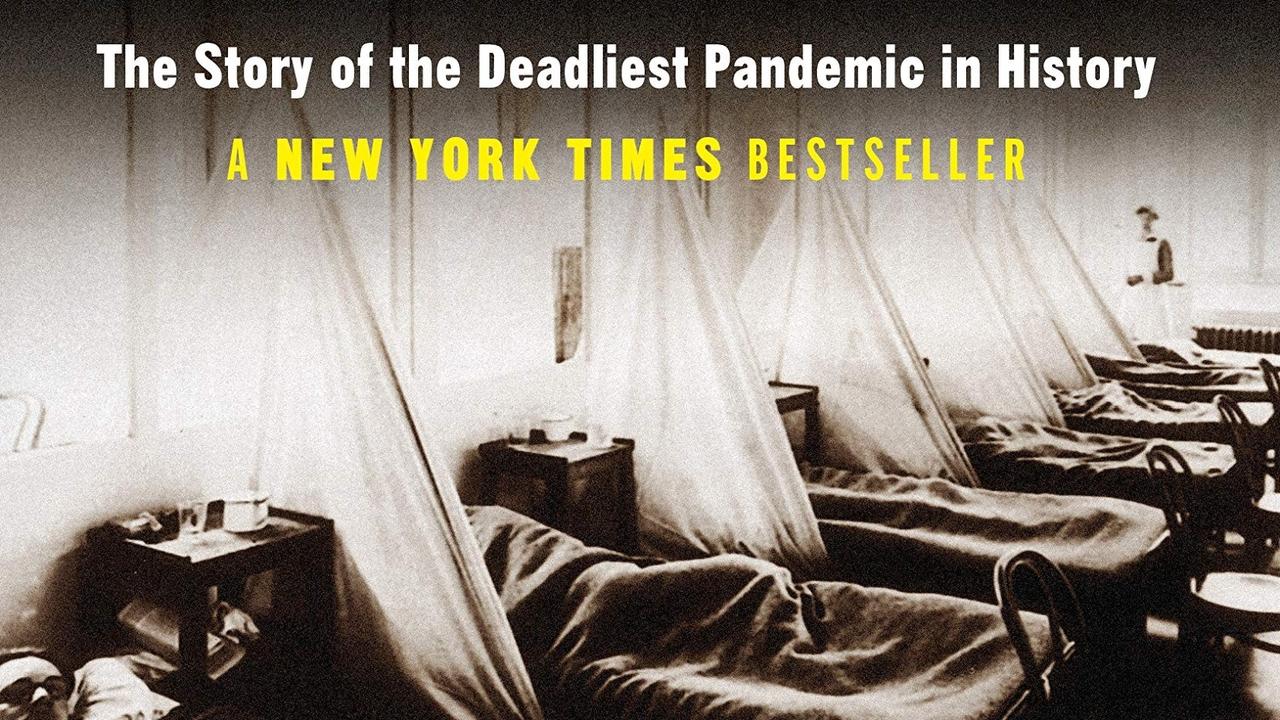
I've been reading John Barry's excellent book, The Great Influenza, and while I'm still reading, I thought I'd share some of the more compelling excerpts and points so far.
If you're seeking to understand the current COVID-19 Pandemic, I'd highly recommend Barry's account. It's superb...
Between 1959 and 1997, only 2 people died from Avian type flu viruses
1997: the Bird Flu killed 18 people in Hong Kong. Millions of chickens were slaughtered.
2003: It reemerged with a vengeance.
Since then, these avian viruses have infected over 2000 people and killed almost half of them.
These viruses, like the Corona virus, binds to cells deep in the lung, and start in the upper respiratory tract.
So it passes easily from person to person.
1918 Influenza was the first great collision between nature and modern science.
In 1918: world population was 1.8 Billion
Today: 7.6 Billion
Our advantage today is that modern medicine can prevent more than half the deaths that resulted in 1918 with antibiotics.
Hospitals and State Governments are really good at cutting costs and being efficient—but that works against you during a pandemic.
So, it’s a lesson learned.
This has hit us hard, but it could be far worse…and still could be, if we’re not careful:
Transportation systems can be disrupted.
Supply Chains can collapse.
2009 H1N1 Swine Flu Pandemic taught us some good lessons.
Killed half a million worldwide, with about 12,000 deaths here in the US
Seasonal Flu kills 650,000 worldwide annually. Here in the US it kills anywhere between 3,000 and 50,000 every year.
It’s all about surveillance though.
Pandemics are nothing new: 1889, 1918, 1957, 1968, 2009, and today in 2020.
They’ve come in waves. And this one will too.
Here’s the good news: With every wave, comes a degree of herd immunity.
Here’s the bad news: as the virus mutates, it often becomes more virulent.
But every pandemic, every wave, every virus is different.
At CDC, the mantra there is: “When you’ve seen one influenza season, you’ve seen one influenza season.”
Here’s the thing about vaccines: they take time to develop. The viruses are grown in eggs, harvested, killed, and purified. Over time the virus adapts itself to eggs.
They can also be produced in mammal cells and insect cells.
Both take months to deliver large quantities of vaccine.
In the meantime, it takes 6-10 weeks for a virus to burn through a community in perfect circumstances.
Layered Interventions: social distancing, wearing masks, closing down events, schools.
The big problem in a pandemic is the relationship between governments, non-governmental organizations, and the truth.
Political leaders have to understand ground truth, and be able to handle it.
Planning doesn’t equal preparation.
Political leadership is typically the weak link in any plan. Our 2014 experience with Ebola is a good example. How long did it take us to close our borders to those countries where the virus was rampant?
Quarantines are really nothing more than firebreaks. They buy you time. And they save lives.
Governments need to tell the truth in a crisis.
You don’t create terror by exaggerating the disease, but by minimizing or denying it.
Pandemic response requires leadership. Pandemics erode trust. And everything is based on Trust—societies depend on it.
Those who occupy positions of authority and responsibility must lessen the panic. How do you do that? By educating and training.
The Heroes—the Leaders of Past Pandemics:
William Henry Welch: Arguably the single most powerful person in the history of American medicine. Was said he could “transform men’s lives at the flick of a wrist.”
When he first observed autopsies of influenza victims, he said, “This must be some new kind of infection or plague.”
Simon Flexner: Brought the mortality rate for meningitis down to 18% in 1910 without antibiotics. Today, with antibiotics, the mortality rate is 25%.
Oswald Avery and Richard Shope: Determined the cause of Influenza. Came up with one of the most important scientific discoveries of the 20th Century. Killed Shope.
William Park and Anna Williams: Dramatic advances in Diptheria antitoxins.